A windbreaker lives or dies by its shell fabric. The cut, the color and the logo all matter, but whether the jacket actually blocks wind, sheds a passing shower and packs into its own pocket comes down to a thin panel of coated nylon or polyester and how heavy it is. Custom windbreakers add a second problem on top of that: the same lightweight, coated fabric that makes the jacket good is finicky to print and stitch. This guide walks through the fabric decisions first, then how to decorate the result without undoing what you paid for.
Nylon or polyester: the shell fabric decides the feel
Almost every windbreaker shell is one of two fibers. Nylon is the lighter, stronger, more packable choice, which is why ultralight shells are built from it, usually in a ripstop weave whose reinforcing grid stops a small snag from becoming a tear. Polyester is the more color-stable and UV-resistant option, holds print a little better, and comes in more recycled forms, which matters if sustainability is part of the brief. In practice nylon reads as technical and slippery, polyester reads as crisper and more matte, and a taslanized (air-textured) version of either softens the hand toward a cotton-like feel at the cost of some packability. A cheap polyester taffeta, typically 75-denier with a basic coating, is fine for occasional wear and event giveaways but will not feel like a jacket someone reaches for every week.
Weight changes what the jacket is for
Fabric weight, measured in grams per square meter, is the single number that tells you what kind of windbreaker you are ordering. Ultralight packable shells run about 30 to 45 GSM on 10-to-20-denier ripstop and stuff into a pocket; all-around performance shells sit around 55 to 70 GSM on 30-to-40-denier cloth; casual and lifestyle jackets climb to roughly 80 to 110 GSM with a fuller hand; and budget entry-level pieces land near 90 to 120 GSM on plain taffeta. Lower weight and lower denier travel together, so the featherlight jacket that disappears in a bag is also the one most likely to snag, while the heavier casual shell feels sturdier but never packs down small.
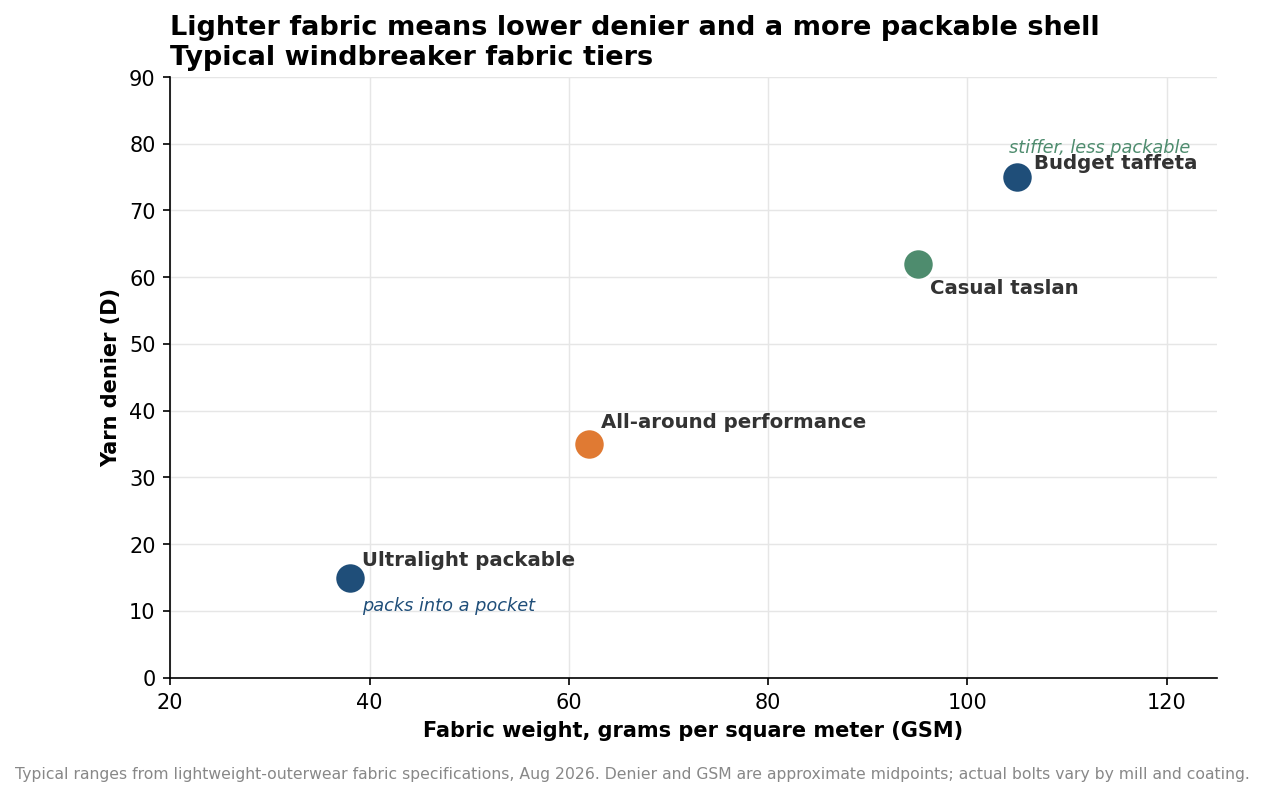
Match the weight to the job before anything else. A running club or a destination event wants the packable end so members will actually carry the jacket; a sideline or corporate-gift windbreaker can afford the heavier, more substantial cloth because it will be worn open over a hoodie rather than crammed into a pocket. Ordering the wrong weight is the most common and least fixable mistake, because no amount of good printing rescues a jacket that is too flimsy or too bulky for how it will be used.
Water resistance comes from the coating, not the weave
A windbreaker is not a rain jacket, and it is worth being honest with your group about the difference. Wind resistance comes from a tight weave; water resistance is added as a finish, either a durable water repellent (DWR) sprayed on the face or a polyurethane coating on the back. A typical windbreaker handles light rain, not a downpour. Measured as hydrostatic head, a basic water-repellent shell sits around 300 to 500 millimeters, whereas a true technical rain shell is rated at 8,000 millimeters and up. DWR also wears off: current PFC-free repellents start strong but lose a meaningful share of their beading after about twenty washes, so set the expectation that the finish is refreshable rather than permanent. If your audience genuinely needs to stay dry, specify a coated or seam-taped shell and accept the extra weight; if they mostly need to cut wind and shrug off a drizzle, a standard DWR windbreaker is the right, cheaper call.
Lining, fit, and the details that get noticed
Beyond the shell, three choices shape how the jacket wears. Lining is the big one: unlined shells are lightest and most packable, a mesh lining adds a touch of comfort and breathability for active use, and a full taffeta or fleece lining adds warmth and structure but kills packability. After that come the closures and trims, an elastic or drawcord hem and cuffs to seal out wind, a stand collar or hood, and zip versus pullover. For a team or company order, confirm the size run early: most custom windbreaker programs offer XS through 5XL across men’s, women’s and youth cuts, but the exact ladder varies by style, and nothing derails a group order like discovering the jacket everyone liked does not come in the sizes half the roster needs.
Decorating a thin shell without wrecking it
This is where windbreakers differ from a cotton tee. The three methods each have a place, and the right one depends on your quantity and art. Screen printing is the most economical for bold, simple logos at volume, but coated nylon is slick and heat-sensitive, so it needs a nylon-bonding or low-cure ink and careful curing to keep the print from cracking or the fabric from scorching. Heat transfer and DTF handle multicolor and detailed art cleanly and carry almost no setup cost, which makes them the practical choice for small runs and gradient logos, pressed at a lower temperature so the shell does not gloss or pucker. Embroidery gives the most premium, textured look, but stitching punches needle holes through the fabric, which on a coated or waterproof panel can compromise the water resistance and pucker a lightweight shell; the usual fix is a small left-chest logo, a woven patch, or reserving embroidery for heavier casual jackets.
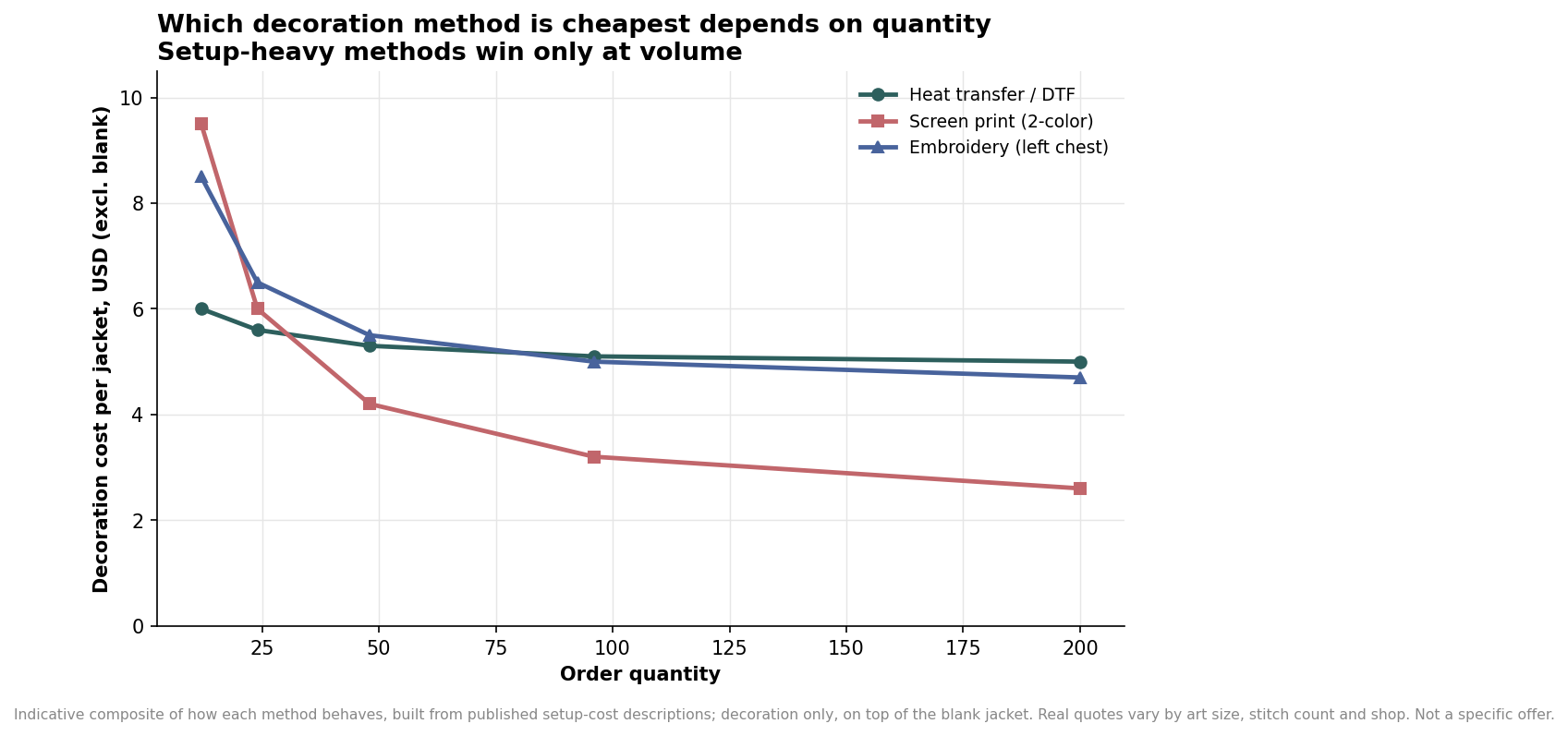
The cost curves above explain why there is no single best method. Heat transfer and DTF start cheap and stay flat, so they win for a dozen jackets; screen printing carries a per-color screen setup that only pays off once the run is large enough to spread it across many pieces; embroidery is priced by stitch count and sits in the middle, flattening out at moderate volume. Decide the quantity and the artwork first, then let those pick the method, and always ask for a decorated sample on the actual shell fabric before a full run, because how an ink or a stitch behaves on 40-denier nylon is not something to discover after the boxes arrive. The prices and specifications here are indicative ranges drawn from current fabric and decoration sources rather than a specific quote, so use them to shortlist a fabric and method and confirm the numbers for your exact job.